


Are Compounded Medications Safe? A Comprehensive Guide


- What Are Compounded Medications?
- Why Are Compounded Medications Prescribed?
- Understanding the Safety and Risks
- Regulation and Oversight
- How Mega Aid Ensures Safety & Quality
- How to Choose a Compounding Pharmacy
- Frequently Asked Questions
- Testimonials & Real-World Experiences
- Visual Guide: Compounded Medication Safety Checklist
- Resources & Further Reading
What Are Compounded Medications?
Compounded medications are customized drugs prepared by specially trained pharmacists to meet the unique needs of individual patients. Unlike mass-produced medications, compounded drugs are tailored by altering, mixing, or combining ingredients in specific doses, forms, or combinations.
Common forms of compounded medications:
Why Are Compounded Medications Prescribed?
Doctors may prescribe compounded medications when:
- A patient needs a dosage, form, or ingredient that isn’t commercially available.
- The patient may benefit from a combination of several active ingredients in one treatment
- The patient has allergies to dyes, preservatives, or fillers found in standard drugs.
- The medication is discontinued or in short supply.
- A child or elderly patient needs a flavored or liquid alternative for easier administration.
Table: When Compounding is Necessary
| Scenario | Example |
|---|---|
| Allergy to ingredient | Lactose-free pain cream |
| Discontinued medication | Custom hormone replacement |
| Difficulty swallowing pills | Liquid antibiotics for children |
| Drug shortage | Compounded semaglutide |
Understanding the Safety and Risks
Key Facts:
- Compounded drugs are not FDA-approved, meaning the FDA does not verify their safety, efficacy, or quality individually.
- Compounding pharmacies must use pharmaceutical-grade ingredients sourced from FDA-registered suppliers.
- State Boards of Pharmacy regulate compounding pharmacies, and many seek accreditation for higher standards.
Potential Risks:
- Variability in potency or quality
- Risk of contamination if not prepared under strict standards
- Incorrect dosing, especially with injectable or pediatric medications
Benefits:
- Customized for individual needs
- Avoids unnecessary ingredients or allergens
- Can improve medication adherence
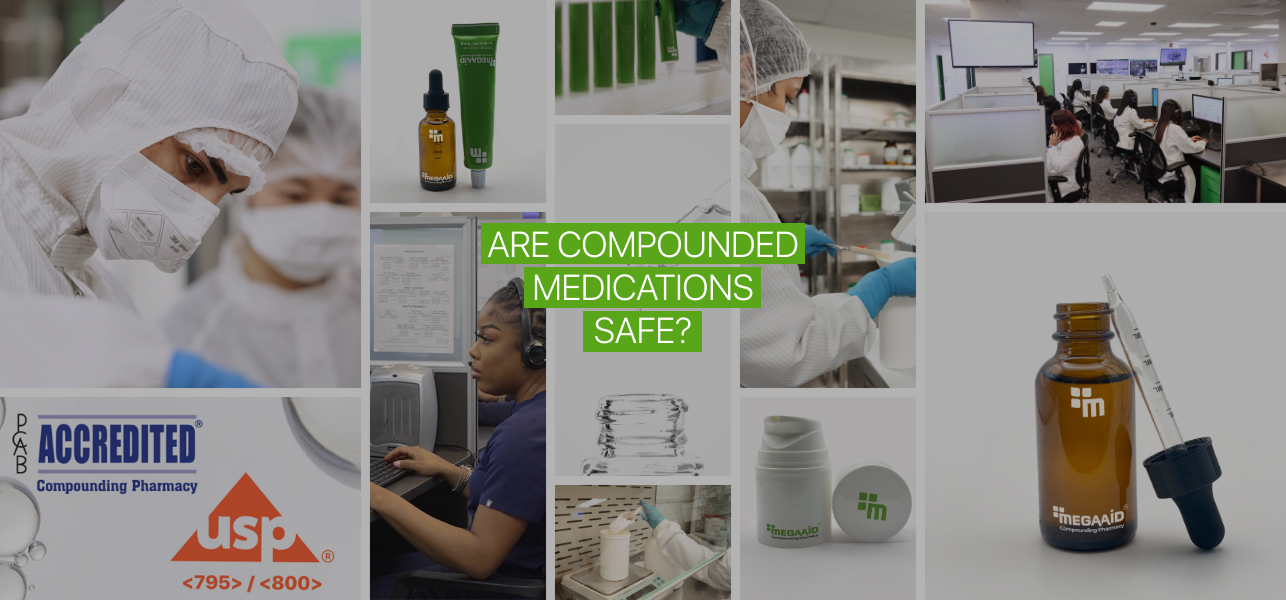
Mega Aid Compounding Pharmacy compounds all medications in PCAB-accredited, USP 795 & 800 compliant labs, using stringent quality checks at every stage.
- State Boards of Pharmacy: Oversee day-to-day operation and licensure
- FDA: Monitors and inspects some facilities (especially outsourcing facilities)
- USP Standards: Set national quality standards for compounding (USP <795>, <797>, <800>)
- Accrediting Bodies: e.g., Pharmacy Compounding Accreditation Board (PCAB)
How Mega Aid Ensures Safety & Quality
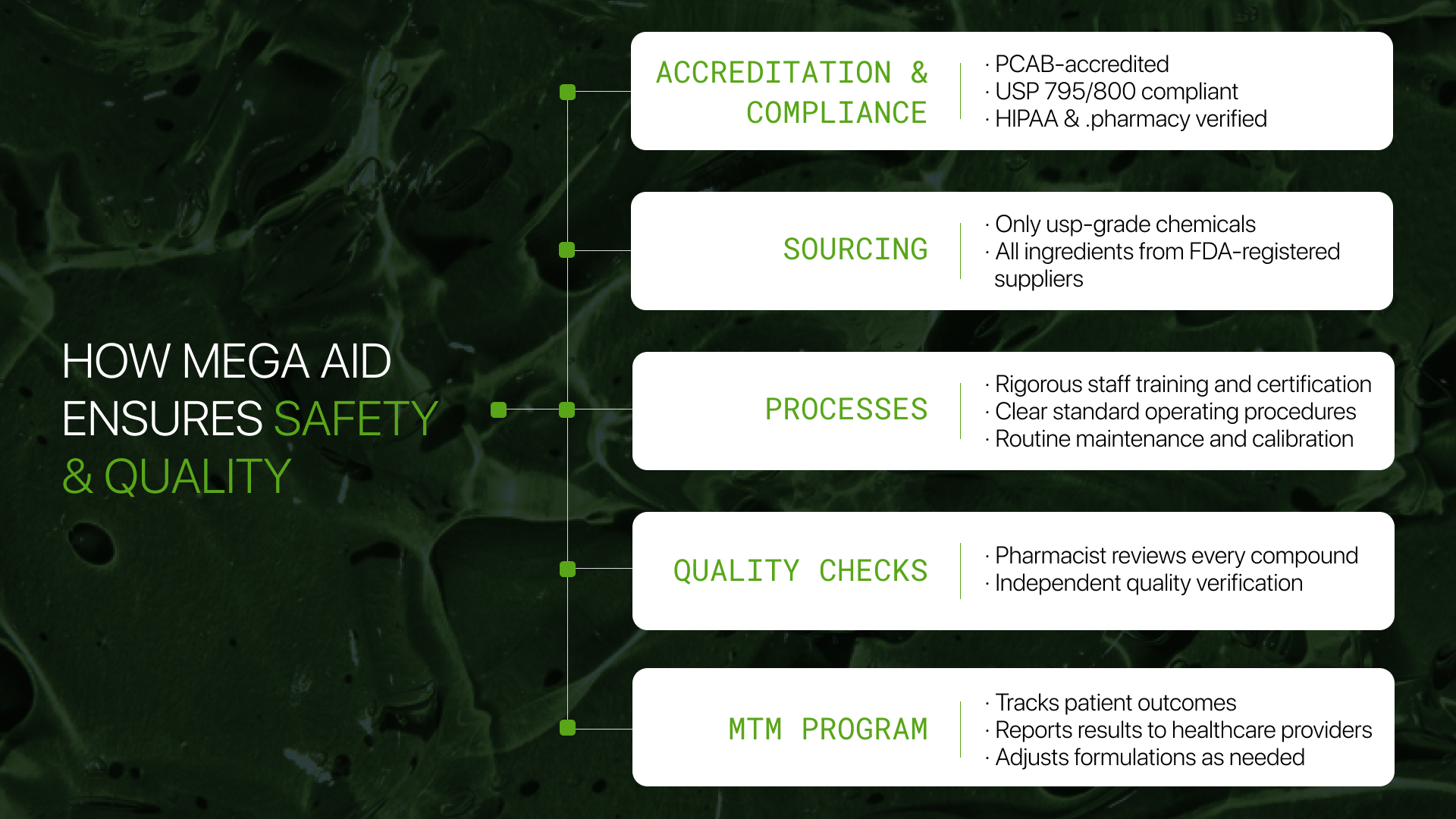
Mega Aid Compounding Pharmacy’s approach prioritizes patient safety, efficacy, and transparency:
1. Accreditation & Compliance
- PCAB-accredited
- USP 795/800 compliant
- HIPAA & .pharmacy verified
2. Sourcing
- Only USP-grade chemicals
- All ingredients from FDA-registered suppliers
3. Processes
- Rigorous staff training and certification
- Clear standard operating procedures
- Regular calibration and maintenance of equipment
4. Quality Checks
- Pharmacist reviews every compound
- Independent quality verification
5. Closed-Loop Collaboration within Medication Therapy Management
- Tracks patient outcomes
- Reports results to healthcare providers
- Adjusts formulations as needed
How to Choose a Compounding Pharmacy
Checklist for Patients & Providers:
Frequently Asked Questions
Q: Are all compounded medications unsafe?
A: No. When prepared by a reputable, accredited pharmacy, compounded drugs can be just as safe as commercial drugs for appropriate uses.
Q: Why aren’t compounded drugs FDA-approved?
A: They are made case-by-case for individuals and cannot undergo the same mass testing as commercial drugs.
Q: How can I verify a compounding pharmacy’s safety?
A: Ask for PCAB accreditation, USP compliance, and ingredient sourcing information.
Q: Does insurance cover compounded medications?
A: Coverage varies—check with your plan or ask Mega Aid Compounding staff for help.
Mega Aid is proud to provide direct access to pharmacists for any questions about your compounded medication.
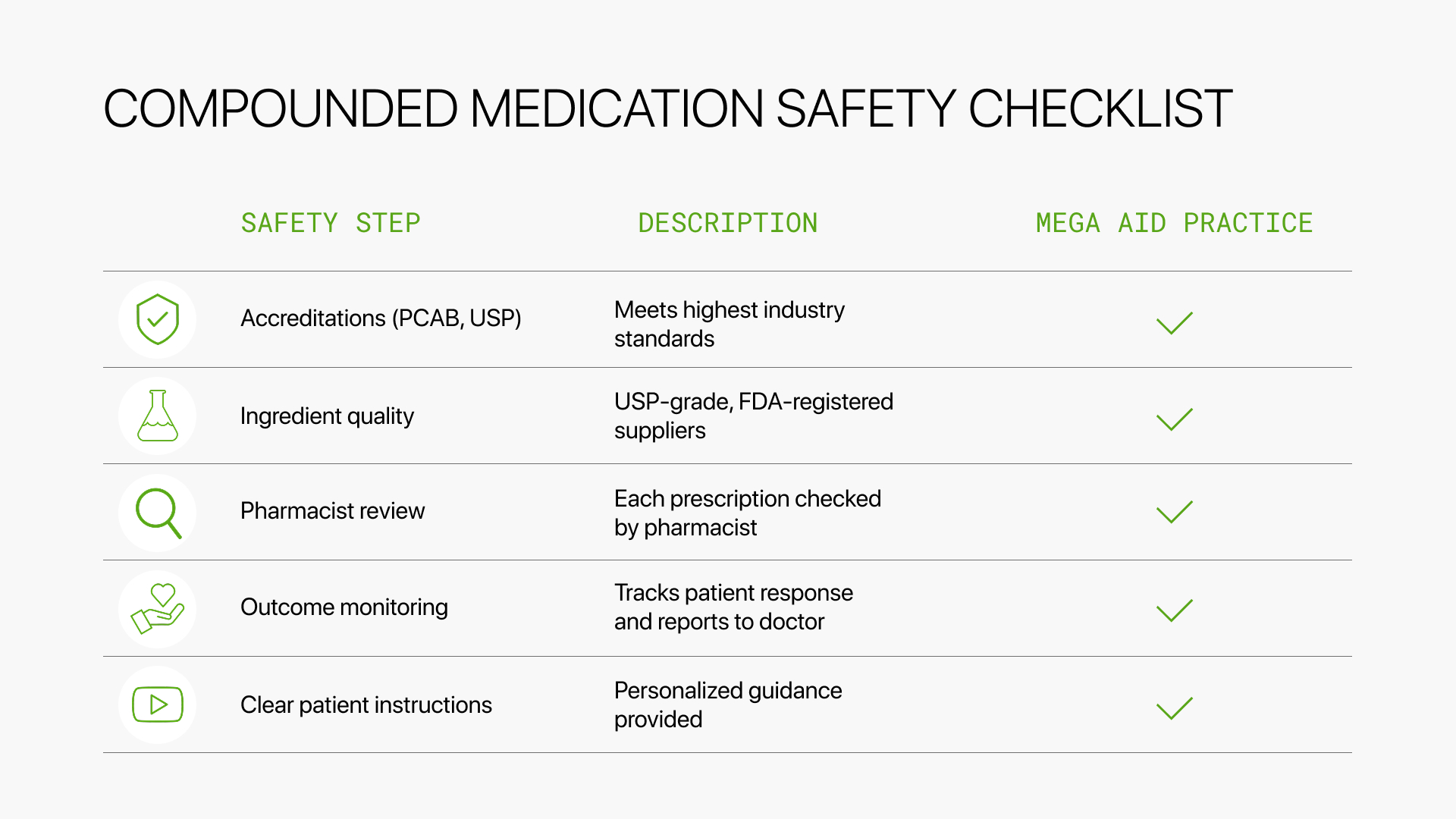
| Safety Step | Description | Mega Aid Practice |
|---|---|---|
| Accreditation (PCAB, USP) | Meets highest industry standards | ✔️ |
| Ingredient Quality | USP-grade, FDA-registered suppliers | ✔️ |
| Pharmacist Review | Each prescription checked by pharmacist | ✔️ |
| Outcome Monitoring | Tracks patient response and reports to doctor | ✔️ |
| Clear Patient Instructions | Personalized guidance provided | ✔️ |
Compounded medications are a vital part of personalized healthcare, especially when patients have needs that cannot be met by standard, mass-produced drugs. While there are risks, working with a reputable, accredited pharmacy like Mega Aid ensures that quality, safety, and patient outcomes are always the top priority. Always consult with your healthcare provider and pharmacy team about any concerns, and never hesitate to ask for documentation of safety and accreditation.