


How Medication Therapy Management (MTM) Improves Provider Workflow and Patient Outcomes


- Introduction to Medication Therapy Management (MTM)
- Core Components of MTM
- How MTM Optimizes Provider Workflow
- Direct Patient Benefits of MTM
- Mega Aid’s MTM Approach: Real-World Impact
- Case Studies and Testimonials
- Frequently Asked Questions (FAQs)
Introduction to Medication Therapy Management (MTM)
Medication Therapy Management (MTM) is a collaborative, patient-focused service designed to optimize medication use, prevent adverse events, and improve health outcomes. MTM includes a systematic review of all medications a patient is taking—including prescriptions, over-the-counter drugs, and supplements—and coordinates care between pharmacists, physicians, and other healthcare professionals.
Key MTM Benefits:

Core Components of MTM
Medication Therapy Review (MTR)
Comprehensive evaluation of all medications for safety and efficacy
Personal Medication Record (PMR)
Up-to-date list of all drugs and supplements maintained by the patient
Medication-Related Action Plan (MAP)
Actionable steps for improving medication use and health outcomes
Intervention/Referral
Pharmacist communicates with provider for issues or referrals
Documentation & Follow-up
All interactions recorded; follow-ups scheduled for ongoing improvement
How MTM Optimizes Provider Workflow
- Reduces administrative burden: Continuous treatment tracking and reporting
- Improves communication: Providers receive timely updates on patient outcomes
- Improves treatment outcomes: Ability to adjust therapy if needed timely manner
- Facilitates collaborative care: Pharmacists, physicians, and care managers work together
- Medication Safety: Checks for drug interactions, duplications, and errors
- Personalized Therapy: Custom compounded medications tailored to patient needs
- Improved Adherence: Education, reminders, and simplified regimens
- Better Chronic Disease Management: Ongoing support for conditions like diabetes and arthritis
- Cost Savings: Fewer ER visits and hospitalizations
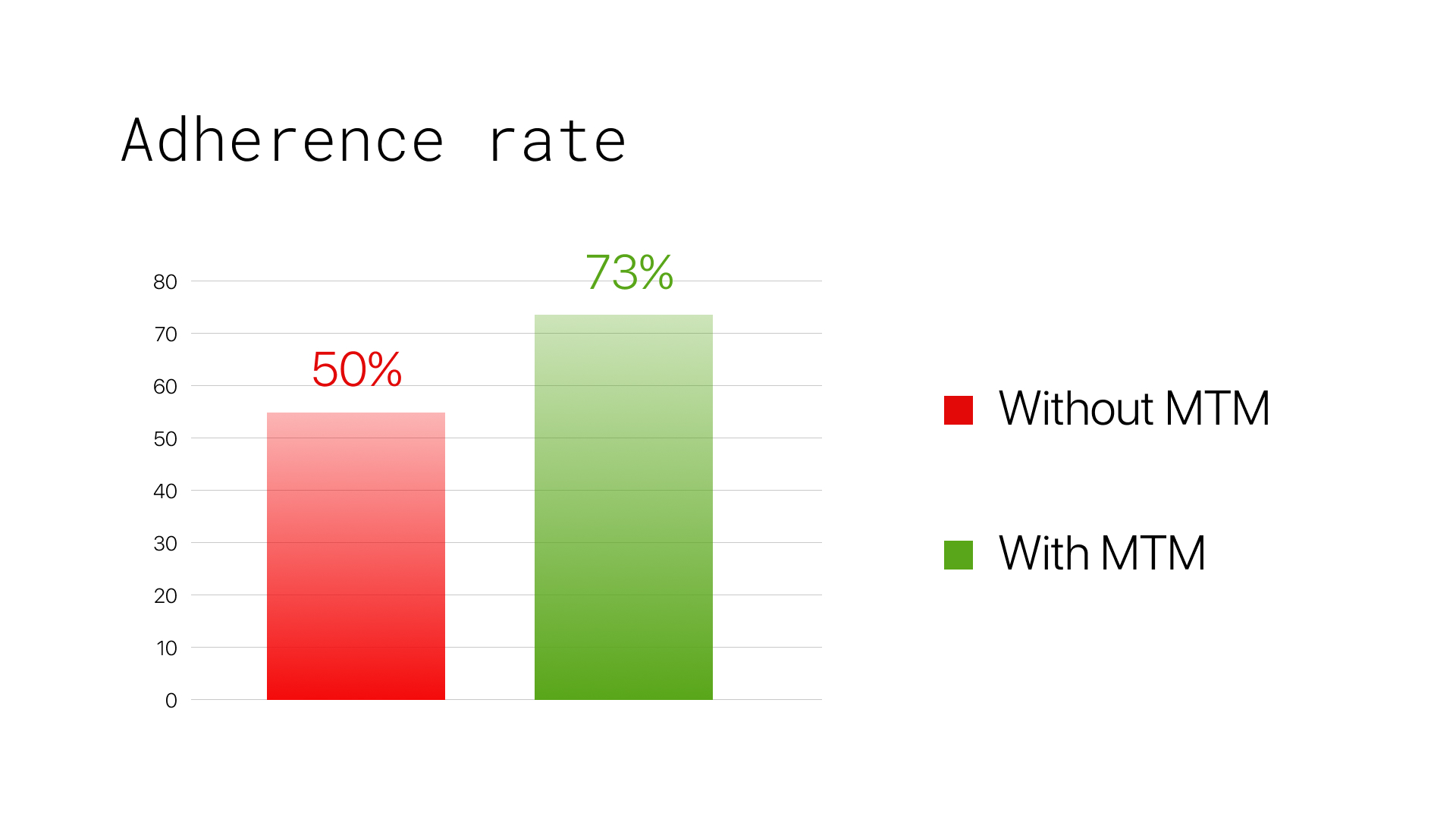
| Adherence Rate |
|---|
| Without MTM: 55% |
| With MTM: 73% |
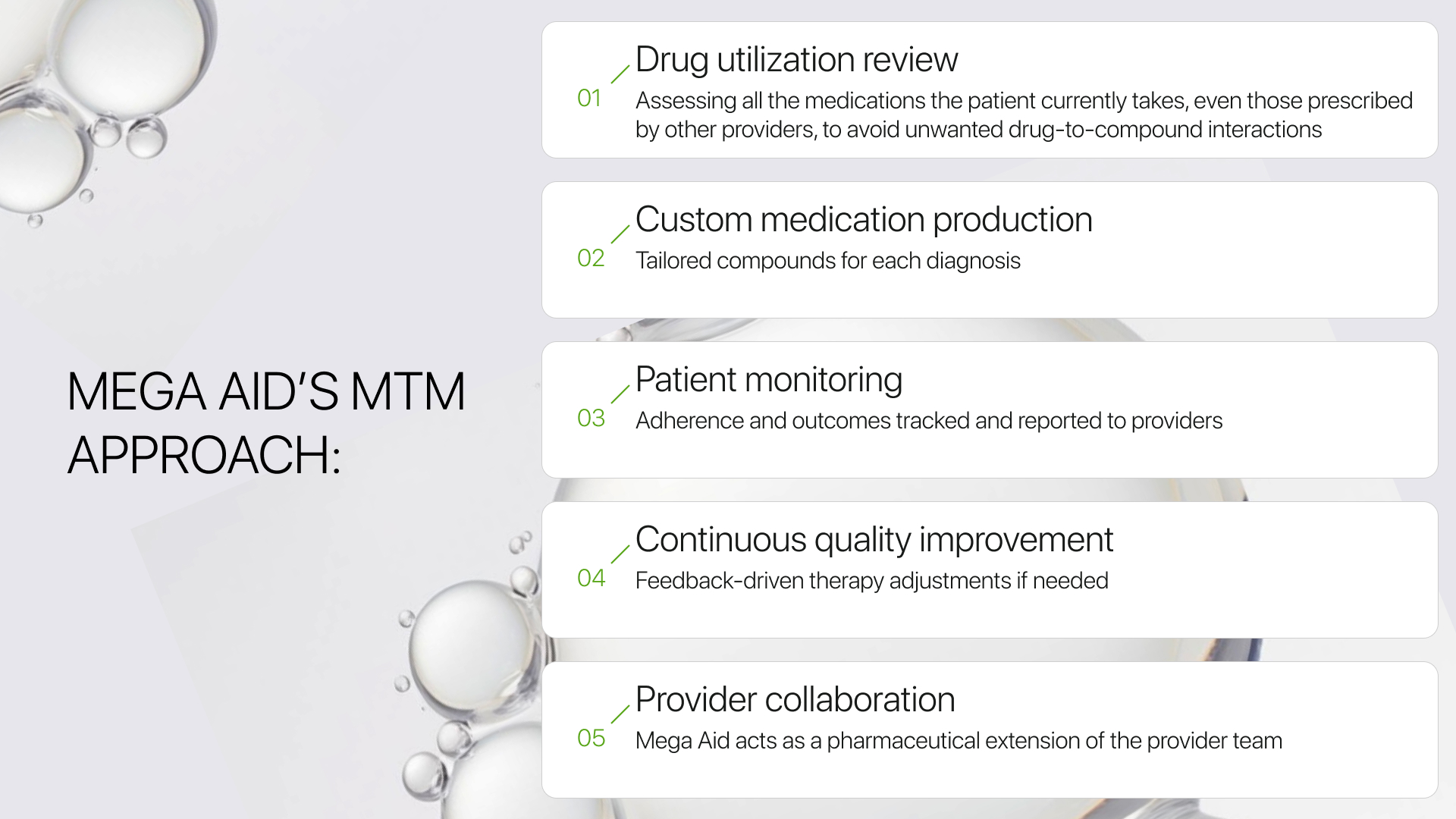
Mega Aid’s MTM Approach: Real‑World Impact
- Drug Utilization Review: assessing all the medications the patient currently takes, even those prescribed by other providers, to avoid unwanted drug-to-compound interactions
- Custom Medication Production: Tailored compounds for each diagnosis
- Patient Monitoring: Adherence and outcomes tracked and reported to providers
- Continuous Quality Improvement: Feedback-driven therapy adjustments if needed
- Provider Collaboration: Mega Aid acts as a pharmaceutical extension of the provider team
Testimonial:
“I am notified if treatment isn’t as effective for my patients so that I can help improve the treatment for the patient by tweaking the formulation of the compound they are receiving to a more effective medication.” — Podiatrist located in Bronx, NY
| Provider Type | Outcome | Mega Aid Role |
|---|---|---|
| Podiatrist | Reduced complications | Custom compound, regular updates |
| Dermatology NP | High patient satisfaction | Personalized therapy, education |
| Neurologist | Lower opioid use | Topical alternatives, monitoring |
| Hospital MD | Seamless prescribing, great results | Full-cycle MTM support |
Q1: What is Medication Therapy Management (MTM), and how does Mega Aid deliver it?
- Medication Therapy Management (MTM) is a structured clinical service that ensures medications are safe, effective, and used correctly. At Mega Aid, MTM goes beyond basic medication review. Our pharmacists evaluate all medications a patient takes, including prescriptions from other providers, OTC products, and supplements. Monitor adherence and outcomes, and communicate findings back to healthcare providers to continuously optimize therapy.
Q2: How does Mega Aid’s MTM improve patient outcomes?
- Mega Aid’s MTM improves outcomes by combining medication review, patient education, and ongoing monitoring. Patients receive clear guidance on how to use their medications correctly, while pharmacists track symptom improvement, side effects, and adherence. This proactive approach helps reduce medication errors, improve compliance, and allows providers to adjust treatment earlier when needed.
Q3: How does MTM support healthcare providers and improve workflow?
- Mega Aid acts as a pharmaceutical extension of the provider’s practice. Our MTM service reduces administrative burden by handling medication reviews, adherence monitoring, and patient follow-ups. Providers receive meaningful updates on treatment effectiveness and tolerability, enabling faster, data-driven therapy adjustments without adding workload to clinical staff.
Q4: What role does drug utilization review play in Mega Aid’s MTM?
- Drug utilization review is a part of Mega Aid’s MTM process. Pharmacists review all medications a patient is taking, even those prescribed by other providers, to identify potential drug–drug or drug–compound interactions, duplications, or contraindications. This is especially important for compounded therapies and helps ensure patient safety across complex treatment regimens.