Is Topical Gabapentin Effective for Neuropathy Pain? An In-Depth Guide


Neuropathy pain, often characterized by burning, tingling, or shooting sensations, can significantly impact quality of life. While oral gabapentin has been a cornerstone in the management of neuropathic pain, many patients experience unwanted systemic side effects such as dizziness, drowsiness, or gastrointestinal upset. This has led to growing interest in topical gabapentin formulations, including compounded creams and gels that deliver medication directly to the affected area. But what does the evidence say about their effectiveness?
- What Is Gabapentin and How Does It Work?
- Why Consider Topical Gabapentin?
- Scientific Evidence: What Do Studies Show?
- Clinical Applications: Who Might Benefit?
- Safety Profile and Side Effects
- Patient Experiences and Real-World Outcomes
- How Mega Aid Compounding Pharmacy Can Help
What Is Gabapentin and How Does It Work?
Gabapentin is a medication originally developed to treat seizures, but it is now widely prescribed off-label for neuropathic pain. It works by modulating calcium channels in nerve cells, reducing the abnormal firing that leads to neuropathic pain sensations.
Why Consider Topical Gabapentin?
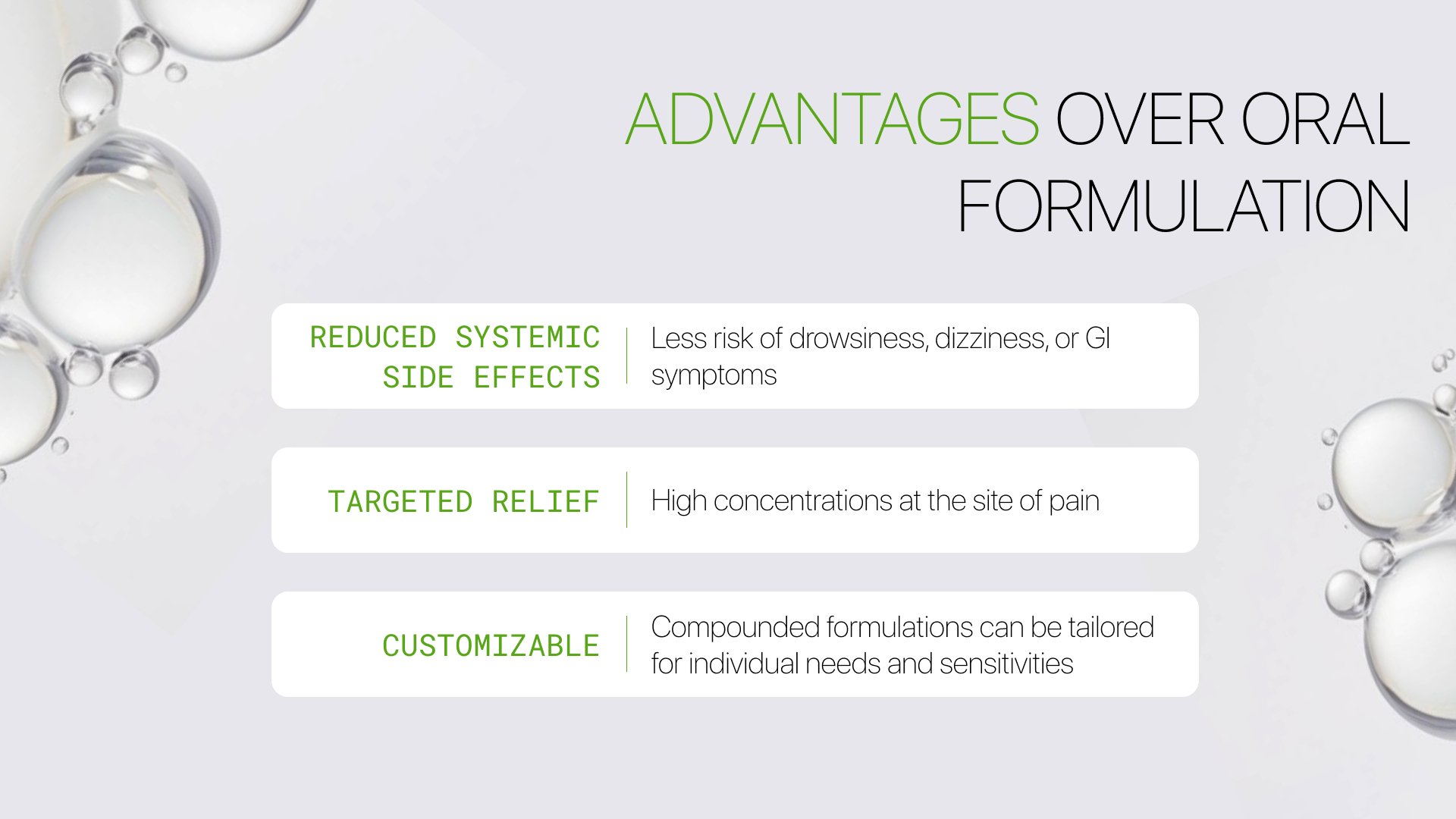
Advantages Over Oral Formulation
- Reduced systemic side effects: Less risk of drowsiness, dizziness, or GI symptoms.
- Targeted relief: High concentrations at the site of pain.
- Customizable: Compounded formulations can be tailored for individual needs and sensitivities.
Scientific Evidence: What Do Studies Show?
Key Findings from Clinical and Preclinical Research
| Study/Review | Model | Main Findings |
|---|---|---|
| Martin et al., 2017 (Pharmaceutics) | Human skin, in vitro | Topical gabapentin in Lipoderm® and DMSO-based gels penetrated human skin. Lipoderm® base showed the most consistent, stable delivery. |
| Shahid et al., 2017 (Eur J Pain) | Animal (rat CCI model) | Topical gabapentin gel (10%) alleviated allodynia and hyperalgesia locally without systemic side effects. |
| Ergisi et al., 2023 (Front Pain Res) | Human, narrative review in vulvodynia | Several small studies found pain reduction with topical gabapentin, but more robust RCTs are needed. |
| Shahid et al., 2019 (BMC Pharmacol Toxicol) | Animal (CIPN model) | Topical gabapentin gel reduced neuropathic pain; systemic side effects were avoided compared to oral gabapentin. |
Key Takeaways:
- In vitro and animal studies show that topical gabapentin can penetrate the skin and reduce neuropathic pain behaviors.
- Human data are promising but limited; some small clinical studies and case series show benefit in conditions like vulvodynia and localized neuropathic pain.
- Large RCTs are limited and results are mixed, possibly due to heterogeneous patient groups and formulations.
Clinical Applications: Who Might Benefit?
Topical gabapentin may be especially helpful for:
- Localized neuropathic pain: Peripheral neuropathy (e.g., diabetic neuropathy, postherpetic neuralgia)
- Vulvodynia and genital pain syndromes
- Chemotherapy-induced peripheral neuropathy (CIPN)
- Patients intolerant to oral gabapentin
Safety Profile and Side Effects
What Are the Risks?
- Local irritation: Some users report mild burning or stinging at the site of application.
- Systemic side effects: Rare, as absorption into the bloodstream is minimal.
- Allergy: Possible to any component of the compounded cream.
“The gabapentin gel formulation afforded desirable neuropathic pain alleviating effects devoid of unwanted systemic side-effects.” — Shahid et al., 2017
Patient Experiences and Real-World Outcomes
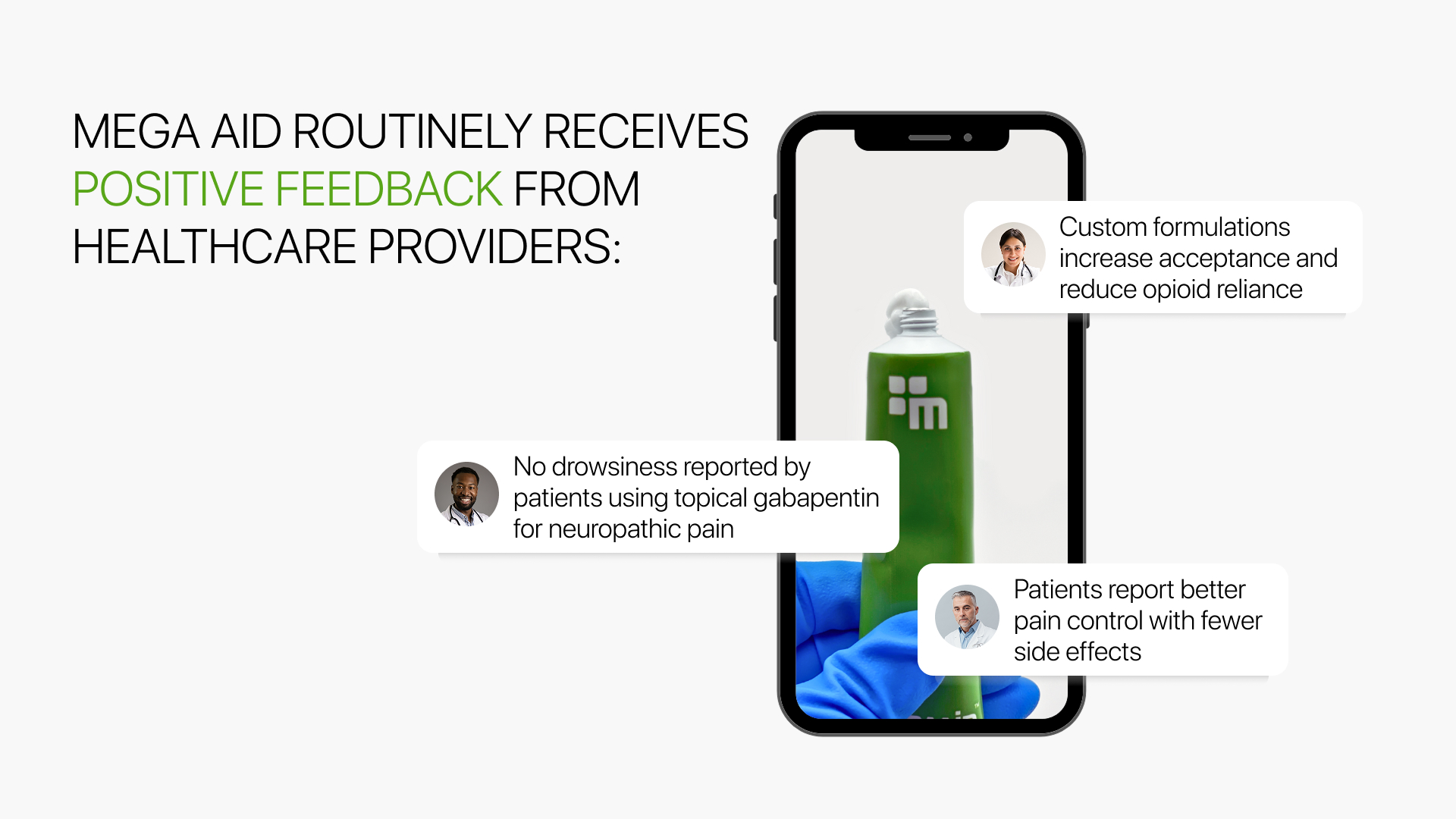
Mega Aid Compounding Pharmacy routinely receives positive feedback from healthcare providers:
- No drowsiness reported by patients using topical gabapentin for neuropathic pain.
- Improved adherence: Custom formulations increase acceptance and reduce opioid reliance.
- Quality of life: Patients report better pain control with fewer side effects.
How Mega Aid Compounding Pharmacy Can Help
At Mega Aid, we specialize in compounding personalized topical neuropathy therapies, including gabapentin-based creams and gels. Our approach:
- Customization: The set and dosage of active ingredients may be adjusted to the patient’s needs to enhance efficacy. In addition to Gabapentin, we may add TCAs (Doxepin, Amitriptyline), Anesthetics (Lidocaine), and Counterirritants (Capsaicin)
- Collaboration: Through an in-house Medication Therapy Management service, we track patient treatment, report outcomes to the healthcare provider, and collaborate to adjust therapy as needed.
- Quality: All products and processes are PCAB-accredited and comply with USP 795/800 standards.

Healthcare providers' reviews on Mega Aid Compounding Pharmacy:
- Martin CJ, et al. Development and Evaluation of Topical Gabapentin Formulations. Pharmaceutics. 2017.
- Shahid M, et al. Topical gabapentin gel alleviates allodynia and hyperalgesia in the chronic sciatic nerve constriction injury neuropathic pain model. Eur J Pain. 2017.
- Ergisi M, et al. Effectiveness of topical gabapentin in the treatment of vulvodynia: a narrative synthesis. Front Pain Res. 2023.
- Shahid M, et al. Efficacy of a topical gabapentin gel in a cisplatin paradigm of chemotherapy-induced peripheral neuropathy. BMC Pharmacol Toxicol. 2019.
- Brutcher RE, et al. Compounded topical pain creams to treat localized chronic pain: a randomized controlled trial. Ann Intern Med. 2019.
This page is for informational purposes only and does not constitute medical advice. Always consult your healthcare provider for diagnosis and treatment options.